



Many companies chase headlines with flashy growth stories. Old Republic International (NYSE: ORI) has built something different: a quiet record of resilience. With more than a century of operations, a Fortune 500 listing, and one of the longest dividend streaks in U.S. corporate history, Old Republic shows how consistency and discipline can carry weight for long-term investors.
Company History
Old Republic began over 100 years ago, building its reputation step by step through multiple market cycles. That history helped shape its conservative culture and focus on balance. The company entered the New York Stock Exchange in 1968, giving investors a long track record of public performance. Over the past decade, the stock delivered an annualized total market return of 16.7% per share, underscoring how steady growth compounds over time.
Dividends have been central to this story. Old Republic has paid them for 84 consecutive years and raised them for 44 years in a row. Few firms in any sector can match that consistency. For investors working with a financial adviser or planning retirement income strategies, this record provides reassurance that management prioritizes stability as much as growth. This foundation sets the stage for the company’s current structure and operations.
Business Description
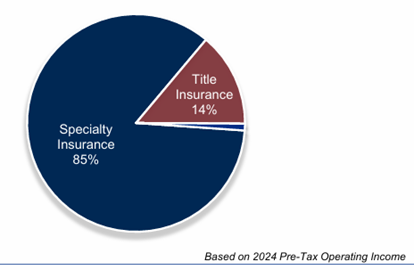
Old Republic operates through two main divisions: specialty property and casualty (P&C) insurance, and title insurance. Specialty lines make up about 85% of its operating income. This segment serves industries like trucking, construction, and manufacturing, often through Fortune 500 clients. Many of these clients hold some of their own risk through captives or large deductibles, while Old Republic provides underwriting and claims expertise. That shared-risk approach has helped the company maintain retention rates above 90% and keep combined ratios, a key measure of insurance profitability, within a consistent target range of 90-95.
Title insurance accounts for about 14% of operating income. Old Republic ranks as the No. 3 provider in the U.S. in this sector and takes a different approach from some competitors by partnering with independent title agents. Its StarsLink platform supports those agents with calculators, fraud protection, and electronic document tools. By working as a partner rather than a competitor, Old Republic strengthens long-term relationships across real estate cycles.
The firm’s decentralized structure ties both businesses together. Each unit makes decisions closer to its markets, which fosters specialization and accountability. This operating style has also supported expansion into newer areas such as cyber, accident and health, and specialty niche lines. That adaptability connects back to the company’s history of steady evolution, showing how Old Republic maintains relevance without losing focus on conservative management.
The Bottom Line
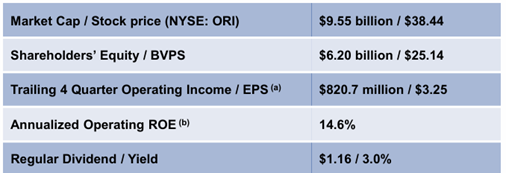
By the middle of 2025, Old Republic was valued at $9.5 billion and backed by $6.2 billion in equity. It pulled in $820 million in operating income over the prior year, working out to $3.25 per share. Return on equity hit 14.6%, which stands up well in the insurance space. The 3% dividend yield adds another layer, especially for retirement portfolios built around dependable income.
Old Republic tells the same story no matter where you look, past or present. The company’s long history of steady dividends lines up with how it runs things today: careful with its balance sheet, cautious in how it sets aside reserves, and thoughtful about spreading risk across different lines of business. For investors looking for a steady stock that pays a nice, increasing dividend, Old Republic makes its case without much noise. Its track record, business structure, and approach all reflect a company that runs on consistency, quietly but deliberately, in a space that doesn’t always reward patience.


________________________________________